Instead, you come home to a living room blizzard of white stuffing and shredded fabric. It’s frustrating, expensive, and — if you’ve been here more than once — genuinely demoralizing.

As a devoted dog owner, I’ve felt that sinking feeling in my stomach more times than I’d like to admit. But bed-chewing isn’t always just ‘bad behavior’; often, it is a form of communication, and once you understand that, everything changes.
Your dog may be bored, struggling with anxiety, or simply moving through the natural phase of teething. Whatever the cause, the behavior is fixable.
In this guide, we’ll uncover the root causes of the chewing habit and provide a step-by-step protocol to redirect that instinct for good.
Why Do Dogs Chew Their Beds?
Dogs primarily chew their beds due to puppy teething discomfort, boredom from a lack of physical exercise, or emotional distress caused by separation anxiety. It is often a form of communication or an instinctive self-soothing behavior rather than deliberate misbehavior.
To stop the behavior, we first have to understand it. By looking at the specific environmental and physiological triggers behind these habits, we can uncover exactly why your dog is targeting their bed.
The Natural Instinct to Explore
Dogs are natural explorers. Descended from wild canines, they have an innate need to use their mouths to interact with the world around them. They investigate textures, scents, and objects the same way we might pick something up and examine it in our hands.
A dog bed, with its soft stuffing, unfamiliar textures, and new scent, is practically irresistible to a curious pup.
This isn’t behavior; it’s instinct. The goal is to keep their resting sanctuary from becoming their primary sensory toy.
Puppy Teething: Soothing the Discomfort

Just like human babies, puppies go through an intense teething process. Between three weeks and seven months, they swap 28 baby teeth for 42 permanent ones.
During this window, their gums are tender and inflamed. The soft, yielding material of a dog bed feels like the perfect teether to relieve the discomfort and pressure.
While teething is a temporary phase, providing frozen toys or textured chews can protect your furniture while helping soothe your pup’s discomfort.
Boredom: The “Idle Paws” Problem
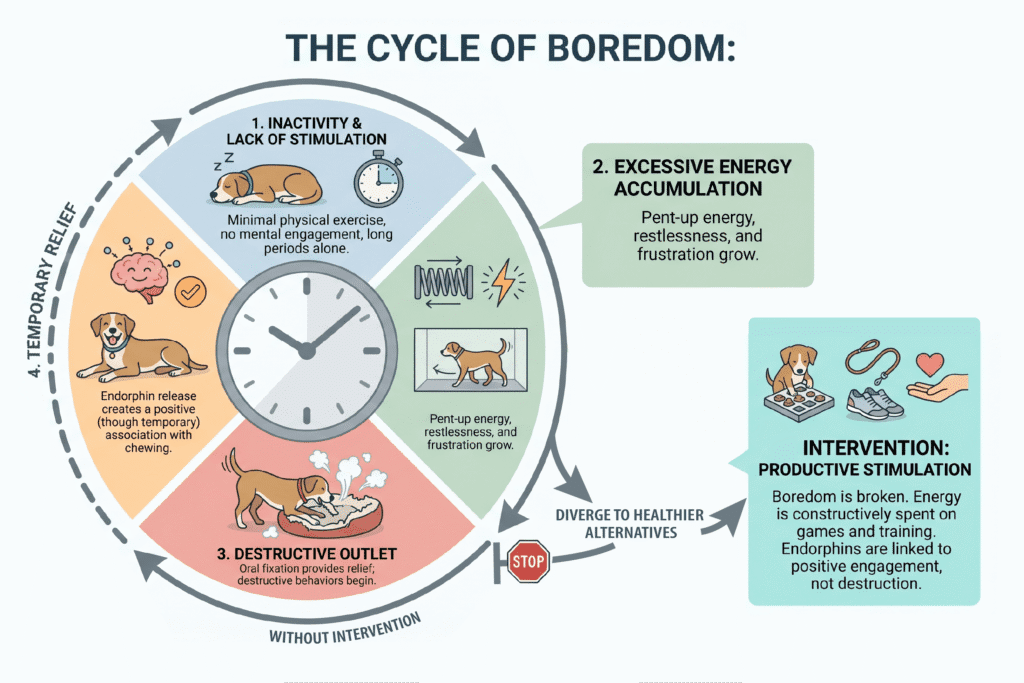
Although teething only lasts so long, boredom is an ongoing lifestyle challenge, and the most common culprit behind destructive chewing. When a dog lacks mental or physical stimulation, they seek an outlet for their pent-up energy.
Chewing serves as a self-soothing mechanism, much like a human might doodle or pace when restless. If you’ve ever come home to a suspiciously quiet house, you already know what unoccupied energy looks like.
A tired, mentally engaged dog is a well-behaved dog. So, building a calm-down routine including exercise, puzzle feeders, or a stuffed chew gives them a healthy outlet before boredom sets in.
Lack of Exercise: A Root Cause
While mental stimulation matters, physical activity is equally important. High-energy breeds like Border Collies, Huskies, and Jack Russell Terriers are notorious for needing an outlet. Yet any dog, regardless of breed, can become restless and destructive without enough movement.
Think of pent-up energy as a tightly wound spring. Without a physical outlet, it has to release somewhere, and it usually lands on your furniture, your shoes, or their bed.
If you notice chewing ramping up, increased physical activity is often the simplest fix. Brisk walks, high-intensity fetch, or regular visits to a dog park can make a significant difference.
Stress and Emotional Comfort
Like humans, dogs experience stress from environmental changes, sudden moves, or startling noises like fireworks. Sadly, they don’t have the luxury of verbalizing it.
When a dog feels overwhelmed, they instinctively turn to oral behaviors to cope. Think of it as the canine equivalent of biting your nails or squeezing a stress ball; it’s a physical outlet for emotional pressure that the body reaches for automatically.
🧬 The Biology of a Bite
When a dog chews, the repetitive physical action stimulates the brain to release endorphins — the body’s natural, “feel-good” hormones. This leads to a decrease in cortisol, the main stress hormone, shifting the dog’s state from high arousal to calm.
In short: Chewing isn’t just destructive behavior; it’s your dog’s built-in stress response too.
They aren’t misbehaving; they are self-soothing. This is why, in high-pressure moments, a dog bed stops being a place to sleep and becomes an emotional comfort object.
Identifying what’s triggering that response is the first step toward helping your dog find a healthier outlet.
Understanding Separation Anxiety

While stress is often a reaction to temporary events, such as a thunderstorm, a car ride, or a house full of guests. For many dogs, the biggest stressor of all is simply your absence.
This is where occasional chewing transitions into a more complex issue: Separation Anxiety. Unlike general boredom, separation anxiety is a genuine stress response triggered by your departure, activating the body’s ‘fight or flight’ system.
Research backs this up: a survey-based study on canine chewing behavior found that chewing on household objects was most strongly associated with being left alone more than any other factor studied.
Because this is a survival response rather than spite, your dog turns to bed-chewing or indoor accidents like peeing on their bed as a way to cope with this distress, typically beginning within minutes of you walking out the door.
Addressing separation anxiety requires a shift in perspective. Simply stopping the chewing won’t work. We have to address the underlying distress.
The process involves gradually exposing your dog to departure cues at a level below their panic threshold, progressively increasing their tolerance so that being alone no longer triggers a stress response. Later in this guide, we’ll walk through this Desensitization Protocol step by step.
💡 Is it always separation anxiety?
Not necessarily. Occasional chewing alone isn’t enough to confirm it. But if the behavior is consistently accompanied by pacing, escape attempts, or vocalization that begins the moment you leave — rather than hours later out of boredom — separation anxiety is worth discussing with your vet or a professional behaviorist.
Attention-Seeking Behavior
Dogs are social creatures, and when they feel ignored or under-stimulated, they don’t suffer in silence. They communicate. That communication often takes the form of attention-seeking behaviors: barking, whining, or chewing on their surroundings.
Surprisingly, even if destroying their dog bed leads to a negative response like a sharp clap, you rushing over, or a stern “No!”, your dog may actually view this as a win. To a lonely dog, negative attention is still attention.
Once your dog makes the connection that chewing equals engagement, the behavior stops being impulsive and starts being intentional.
The most effective antidote isn’t correction after the fact; it’s proactive connection before the need arises. Scheduled play, brisk walks, and one-on-one time fill your dog’s social needs before they feel compelled to act out.
Underlying Health Issues
While boredom and stress are the most common culprits, behavior is often a clue that something physical is wrong. If chewing is sudden or persistent, it’s worth ruling out a medical cause.
- Gastrointestinal Distress: An upset stomach caused by allergies, food sensitivities, or parasites can lead a dog to chew on non-food items (pica) to soothe their internal discomfort.
- Oral Health Issues: Dental problems, such as loose teeth, gum disease, or decaying molars, can prompt a dog to gnaw on soft fabric to relieve oral pain.
- Cognitive Decline: In senior dogs, Canine Cognitive Dysfunction Syndrome (CDS) —often compared to Alzheimer’s—can cause confusion and the sudden onset of new or compulsive chewing habits.
🩺 When to Consult Your Veterinarian
If destructive chewing is accompanied by symptoms like lethargy, changes in appetite, digestive issues, or difficulty breathing, schedule a wellness check immediately. Catching a medical cause early is the best thing you can do for your dog’s long-term well-being.
How to Stop Your Dog From Destroying Their Bed
Tackling destructive chewing may feel like an uphill battle, but it’s more manageable than it feels. By combining environmental changes with behavioral redirection, you can protect your home and keep your pup happy.
Based on expert research and my own hands-on experience, here are the eight most effective strategies to end bed-chewing for good.
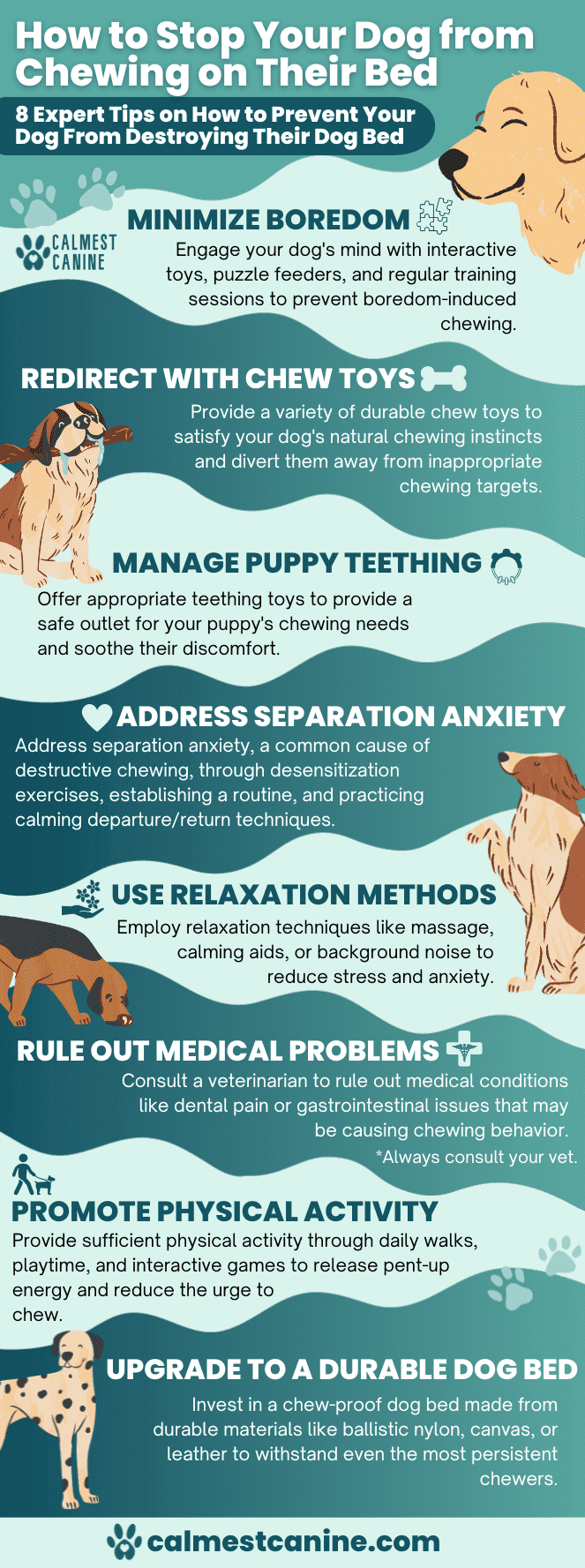
1. Minimize Boredom with Mental Enrichment
Boredom isn’t just a lack of things to do; it’s a biological state. A dog lacking adequate mental stimulation has excess energy that needs an outlet, and the bed becomes the default choice.
Combatting boredom-induced chewing isn’t simply about providing more toys, it’s about providing purposeful mental and physical stimulation. Here are three approaches that work:
- 🧩 Interactive Puzzle Toys: Treat-dispensing toys that require your dog to problem-solve, achieve something a standard walk often can’t; they burn mental energy.
- The Science: Cognitive effort is genuinely more exhausting than physical activity for most dogs. A 15-minute puzzle session can produce the same calm, settled behavior as a much longer walk.
- 🔎 Hide-and-Seek: One of my personal favorites, and judging by my dog’s reaction every single time, his too. It engages your dog’s most powerful sense. Hide high-value treats or a favorite toy around the room and let your dog search for them.
- Why it works: The combination of scent work, anticipation, and rewards keeps their minds fully engaged, making the bed a far less interesting target by comparison.
- ⭐ Sensory Variety: Rotate toys with different textures — squeaky, crinkly, and plush materials each engage your dog’s curiosity differently.
- Novelty matters: A toy that’s been sitting on the floor for three weeks loses its appeal the same way it would for a child.
🐾 Owner’s Hack: The Toy Rotation Method
Instead of leaving all your dog’s toys out at once where they quickly become invisible to them, keep half of them stored away and swap them out every few days.
To your dog, a toy pulled from the closet after a week away registers as genuinely new. A rediscovered rope toy or forgotten squeaky ball will almost always win out over the corner of a dog bed.
At first, I didn’t think to try this, but once I started using a small rotation bin in the closet, it became an easy way to redirect his attention.
When my dog Marlo was teething, I noticed that if his favorite rope toy stayed out too long, he would lose interest and start chewing on the corners of his bed instead. Swapping out a few toys each week helped keep them feeling new and gave me another way to keep him occupied.
2. Redirect with Appropriate Chew Toys
Redirection is one of the most effective and humane tools in behavioral management.
Rather than simply telling your dog ‘no,’ you’re giving them a legal outlet for the same instinct. This teaches boundaries without suppressing the natural chewing drive that, as we’ve established, serves a genuine biological purpose.
The key to successful redirection is matching the right chew toy to your dog’s specific chewing style. A toy that doesn’t meet your dog’s specific needs won’t keep their attention long enough to compete with the bed. Use the table below to find the right fit:
| Type of Chew Toy | Best For… | Key Benefit |
|---|---|---|
| Rubber Toys | Aggressive Chewers | Durable; massages gums and supports dental health |
| Nylon Bones | Power Gnawers | Long-lasting; safer alternative to real bones |
| Stuffing-Free Toys | Shredders who prefer “soft” textures | No messy cleanup or fiberfill choking hazard |
| Rope Toys | Interactive Play | Ideal for tug-of-war; helps reduce plaque buildup |
| Interactive Puzzles | Boredom-prone Dogs | Promotes problem-solving and mental exhaustion |
| Edible Chews | High-Value Reward | Long-lasting satisfaction with dental health benefits |
Once you’ve identified the right toy, timing matters as much as the toy itself. The moment you see your dog approaching or sniffing the bed with that familiar pre-chew focus, calmly offer an alternative before the chewing starts.
Consistent redirection at this stage is what turns the toy into a habit and the bed into background furniture.
💡 Safety First: Always supervise your dog when introducing a new chew toy. No toy is 100% indestructible, and regular inspection ensures a safe experience while promoting responsible chewing habits.
3. Navigate Puppy Teething with “Cool” Relief

Teething is a challenging phase for both puppies and their owners, but the urge to gnaw can be redirected with some simple, satisfying alternatives.
These “cool” options soothe sore gums while giving your puppy a healthy outlet:
- Frozen Stuff-able Toys: Fill a rubber toy with tasty treats like peanut butter, mashed bananas, or plain yogurt. Once filled, freeze the toy until solid. The cold temperature helps numb the gums, while chewing provides relief.
- Frozen Natural Treats: Freeze whole carrots, watermelon chunks, or seedless apple slices for a satisfying crunch that soothes inflamed gums with zero cleanup required.
- Textured Massage Toys: Look for toys with bumps, ridges, or nubs. These unique textures are designed to massage the gums and clean emerging teeth as they break through.
4. Addressing Separation Anxiety
Of all the causes we’ve covered, separation anxiety requires the most patience because you’re not changing a habit; you’re rebuilding your dog’s emotional response to being left alone. Consistency and positive reinforcement are the foundation.
The following are the most effective strategies to help your dog feel secure when you aren’t at home:
- Gradual Desensitization: The most structured and effective approach that teaches your dog that being alone is safe through a step-by-step process. See the protocol below.
The Desensitization Protocol
The goal is to return before your dog reaches their anxiety threshold, because once they become overwhelmed, chewing often becomes a self-soothing response.
- Normalize Alone Time in Your Routine: Don’t wait until you leave the house to practice independence. Incorporate scheduled quiet time into your daily routine while at home. Using a crate, baby gate, or separate room for 30 minutes a day teaches your dog they can relax and feel safe without constant reassurance.
- Establish a Predictable Routine: Dogs are creatures of habit. Consistent feeding, walking, and playtime schedules reduce overall anxiety. When a dog knows exactly when their needs will be met, they’re less likely to become anxious during the gaps in your day.
- Practice Calm Transitions: Avoid long, emotional goodbyes. Depart quietly, and when you return, wait until your dog has settled before offering calm attention.
5. Relaxation Techniques for Stress Reduction

Stress takes a real toll on a dog’s physical and mental well-being. A chaotic or unpredictable environment can keep them in a constant state of low-level anxiety.
By proactively managing your dog’s surroundings, you can help them settle into a relaxed state rather than a destructive one.
- Designate a Safe Haven: Create a dedicated space, such as a crate, a quiet corner, or a separate room and fill it with their favorite toys. The goal is to minimize disruptions and foster a sense of security.
- Provide a Fresh Sleeping Space: Maintaining a clean dog bed isn’t just about hygiene; it’s about comfort. Regular washing removes allergens and stale scents, providing a fresh, familiar space to retreat to during moments of high anxiety.
- Utilize Calming Aids: For dogs that need extra support, pheromone diffusers, calming supplements, or anxiety wraps can help reduce anxiety during storms, fireworks, or long periods of alone time.
- Curate the Background Noise: Leaving on audio or visual stimuli can mask outside triggers like traffic or barking neighbors, creating a quieter, more settled atmosphere for your dog.
Not all background audio has the same calming effect. Some genres and shows are actually better suited for their relaxing effect on dogs. The table below breaks down what works best and includes some of my go-to picks.
| Distraction Type | Why it Works | My Pick |
|---|---|---|
| Television | Visual stimulation; sense of activity and companionship | Animal-themed channels or soothing nature shows |
| Music | Auditory calming; masks outside noises that can cause stress and anxiety | Reggae and soft rock |
| Nature Sounds | Instinctually relaxing; simulates the sound of the outdoors | Bird sounds or recordings of a forest environment |
| Audiobooks or Podcasts | Sound of a calm human voice mimics companionship; especially effective for separation anxiety | Narrative audiobooks or low-energy podcasts with minimal music or sudden loud sounds |
6. Incorporating Physical Activity
A tired dog is a well-behaved dog. Regular physical activity goes beyond burning calories; it’s one of the most effective ways to lower a dog’s baseline stress and reduce the tendency for destructive chewing.
When your dog has a healthy outlet for their energy, the bed transitions from a potential toy back into a quiet retreat.
Build these high-engagement activities into your routine to keep your dog physically satisfied and genuinely calm:
| Type of Exercise | Benefits | How Does it Reduce Chewing |
|---|---|---|
| Long walks or hikes | Burns physical energy while exposing your dog to new sights, smells, and sounds. | Satisfies their curiosity and exploratory instincts without targeting household objects. |
| Fetch or Frisbee | High-energy, interactive play that strengthens your bond. | Redirects focus from chewing to play, while satisfying their instinct to chase and retrieve. |
| Tug-of-war | Builds strength and gives their jaw a healthy, structured workout. | Helps associate chew toys with allowable objects in place of their bed. |
| Agility training | Engages mind and body through structured movement and discipline. | Improves impulse control and reduces overall stress over time. |
| Swimming | Gentle on joints while delivering a full-body workout. | Leaves your dog genuinely spent and too physically satisfied to look for a destructive outlet. |
| Scent Games (Hide & Seek) | Hiding treats or scented objects for your dog to sniff out; taps into their most powerful sense and produces real mental fatigue. | A short scent session can be as tiring as a long walk, leaving little energy for destructive behavior. |
7. Tackling Underlying Medical Concerns
If you’ve ruled out boredom, anxiety, and teething but the chewing persists, a medical cause is worth ruling out. The key is knowing what to watch for.
If any of these signs accompany a sudden increase in chewing, schedule a veterinary check promptly. Catching a medical cause early is always the better path.
8. Upgrading to a Chew-proof Dog Bed
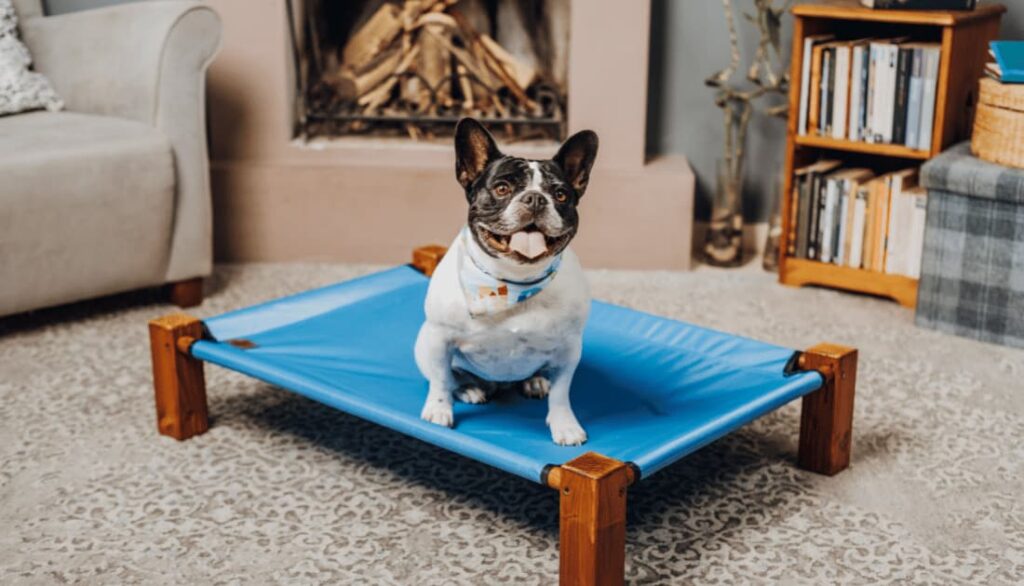
If you’ve addressed the root cause but your dog still occasionally chews, or you want to protect your investment while working through the behavioral steps, then a chew-resistant bed is worth considering.
Unlike standard beds, these beds are made from reinforced materials such as ballistic nylon, canvas, or chew-resistant PVC coating. As we highlighted in our comprehensive guide to dog beds, these industrial-strength designs are built specifically to withstand persistent scratching and chewing by eliminating the loose, soft threads that invite destruction.
In contrast, standard beds are typically made from soft-weave fabrics that give a dog’s teeth an easy point of entry — once they catch a thread, the rest follows quickly.
While a chew-resistant bed is not a substitute for behavioral modification, it serves as a practical environmental management tool. When coupled with the strategies in this guide, it eliminates opportunities for destruction, keeping your dog’s retreat intact while you address the root cause.
| Feature | Standard Pet Bed | Chew-proof Pet Bed |
|---|---|---|
| Material | Soft-weave fabric | Reinforced nylon, canvas, or metal frame |
| Durability | Fine for gentle dogs | Designed to withstand persistent chewing |
| Maintenance | Full replacement when destroyed- with risk of fiber ingestion | Replaceable covers allow for easy cleaning |
| Long-term Cost | Higher if chewing is frequent | More cost-effective over time |
Additional Tips on How to Stop Your Dog from Chewing Their Bed
Before we conclude, here are a few behavioral safeguards to help stabilize your dog’s environment while you work through the primary protocols:
- Try a deterrent spray: An unpleasant-tasting spray applied to the bed can discourage chewing at the surface level. You can pick up a commercial option like Bitter Apple Spray at most pet stores, or make a non-toxic, pet-safe alternative at home using this simple formula:
- Mix the base: Combine 2 parts water with 1 part distilled white vinegar in a clean spray bottle. (Avoid using essential oils, as concentrated citrus can be toxic and irritating to a dog’s sensitive respiratory system).
- Add a safe bitter agent: Add 1 tablespoon of fresh lemon juice. Dogs dislike the bitter taste, and diluted lemon juice is a gentle, pet-safe option.
- Spot test the fabric: Spray a tiny, hidden corner of the bed first to ensure the mixture doesn’t discolor or stain the material.
- Apply to target areas: Mist the solution lightly onto the specific corners or seams your dog has been targeting, avoiding the main center cushion where they rest their head.
Remember, this works best as a short-term deterrent to protect the fabric while you address the root cause.
- Avoid using household objects as chew toys: Offering an old shoe or cushion as a substitute sends a confusing message because your dog has no way of distinguishing between the “allowed” shoe and the one you’d rather they leave alone.
- The “In-the-Moment” Rule: Correcting a dog after the fact doesn’t work the way people think it does. If the behavior happened minutes or hours ago, your dog can no longer connect the correction to the action. Instead, reward calm behavior when you see it.
- Schedule annual wellness checks: Even without visible symptoms, a yearly veterinary check-up can catch early signs of conditions that contribute to compulsive chewing before they become harder to treat.
Conclusion
Bed-chewing is rarely just bad behavior. As we’ve covered, it’s almost always your dog’s way of communicating an unmet need.
Luckily, boredom, anxiety, teething, attention, and medical discomfort all have solutions, many of which are simpler than they seem. The key is patience and consistency.
You won’t resolve weeks or months of established behavior overnight, and that’s okay. Every small win, whether a redirected chew, a calm departure, or a puzzle toy that held their attention, still counts as progress.
Your dog isn’t trying to frustrate you; they’re doing their best with the tools available. Your role is simply to provide them with better options. With the right approach, the bed transforms from a target into a consistent sanctuary where your dog feels truly at peace.