You wake up on a Saturday morning, notice an unexpected wet patch on your duvet, and realize your dog peed on your bed—it wasn’t just a bad dream.

Before frustration sets in, remember: your dog didn’t do this out of spite. Dogs don’t think that way. What appears deliberate is usually an emotional response, an unmet need, or sometimes a medical issue.
In this guide, we’ll walk through the eight most common reasons dogs urinate on beds and what you can do about each one.
Common Reasons Your Dog Might Pee on the Bed
1. Incomplete Potty Training
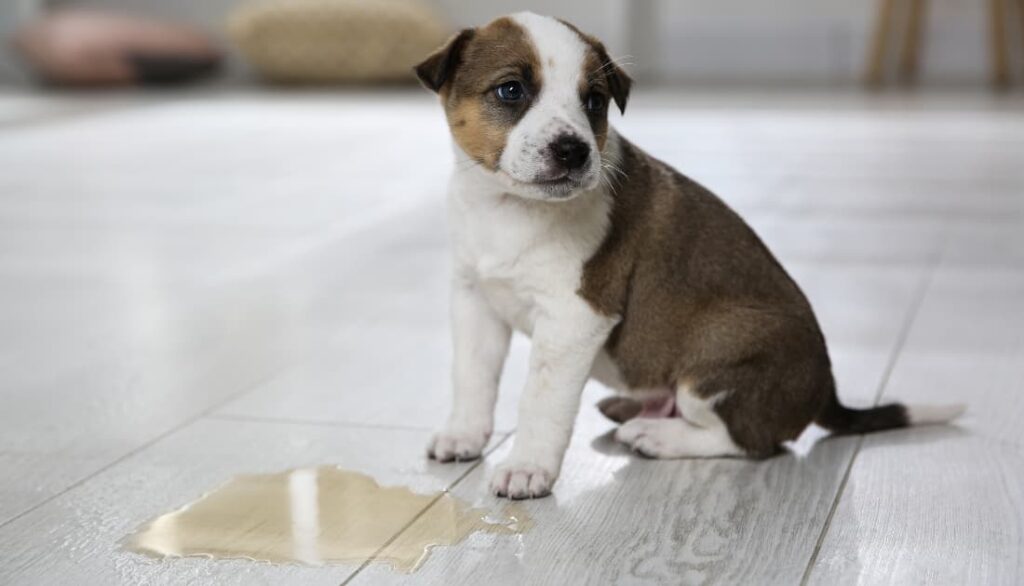
One of the most common and innocent reasons for accidents is simply that your puppy hasn’t fully learned where they’re supposed to go yet.
Potty training a puppy can be challenging; it’s like teaching a toddler bathroom etiquette, but your dog can’t tell you when they need to go. Young dogs have small, underdeveloped bladders and lack the muscle control needed to “hold it.” Any soft, comfortable surface may seem inviting.
If your puppy sleeps in your bed, accidents are more likely because they’re already there when the urge strikes. These accidents aren’t defiance—they simply mean training is still in progress. Patience and consistency are key.
This is why many trainers recommend avoiding ultra-plush bedding during the early stages of potty training and sticking to flatter, easier-to-wash mats instead. To explore different bed types and materials, see our complete dog bed guide.
2. Senior Dogs and Bladder Control
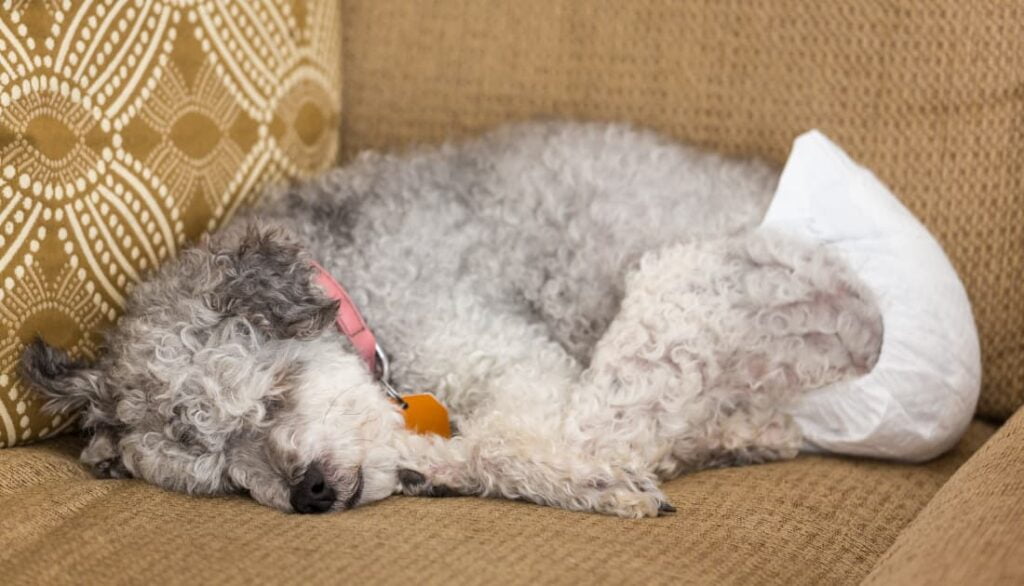
Senior dogs often experience changes in bathroom habits, which are more common than many owners realize.
Common causes of urinary incontinence in older dogs include:
- Hormonal imbalances – particularly common in spayed females, and very manageable once identified
- Canine Cognitive Dysfunction (CCD) – analogous to dementia in humans, which can impact memory, including house-training behaviors
- Degenerative spinal cord disease – can affect the nerve signals that control bladder function
- Age-related muscle weakness – muscles controlling urination become less effective over time
These changes may appear as minor leaks during rest or occasional accidents overnight. Usually, your dog is as surprised as you.
3. Marking Territory: Misunderstood Dog Behavior
Not all bed-wetting is accidental. Sometimes it’s intentional, and understanding the difference changes everything. Territory marking is one of the most misunderstood canine behaviors.
Marking involves small, deliberate amounts of urine in key spots, unlike a full bladder accident. Your dog is leaving scent markers (chemical messages), not a bathroom emergency.
The science behind it is fascinating. A dog’s olfactory bulb (the part of the brain that processes smell) is actually larger and more developed than a human’s.
Research has shown that dog urine contains a complex mixture of pheromones that carry specific information about the individual dog: their presence, social status, reproductive state, and emotional condition.
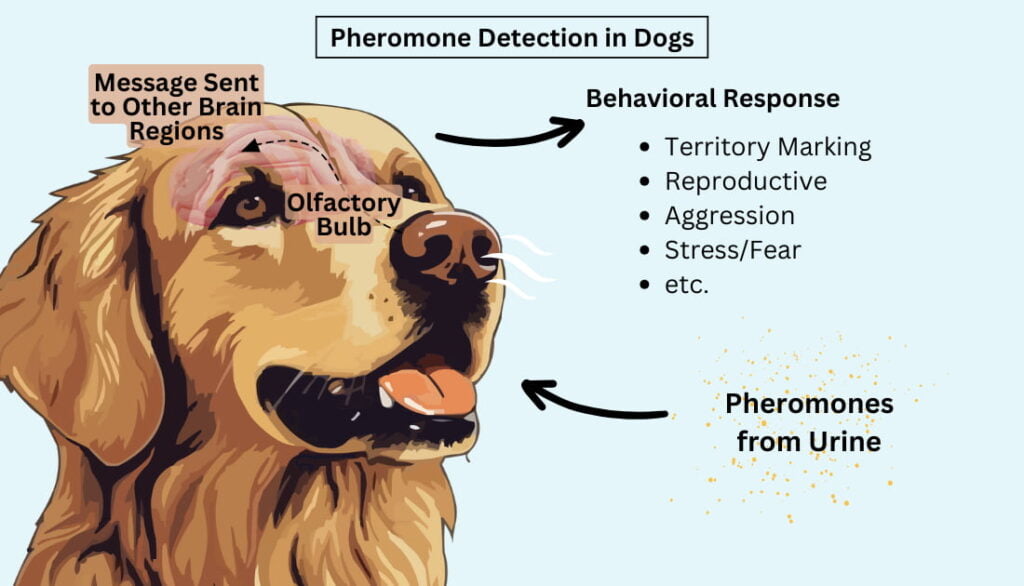
“Scent marking is one of the main forms of communication in canids. It is crucial for territorial marking, synchronization of reproduction, establishment of hierarchies in groups, and formation of new breeding pairs.”
— Stępniak et al., 2023
So when your dog marks your bed, it isn’t a power play or an act of defiance. Your bed carries your scent more strongly than anywhere else, making it important for your dog to add their own signature.
It’s not spite. It’s communication.
4. Emotional Triggers: Stress, Anxiety, and Fear
Dogs are adaptable by nature, but they’re not immune to stress and anxiety. And when those emotions become overwhelming, the effects can show up in unexpected ways, including inappropriate urination.
Common triggers include loud noises, routine changes, the arrival of a new pet, or prolonged time alone. Each can push a dog past their threshold:
| Anxiety Trigger | Signs | Behavioral Response |
|---|---|---|
| Loud and Sudden Noises | Trembling, hiding, whimpering | Seeking comfort on your bed, which may lead to urination |
| Separation Anxiety | Destructive behavior when alone, excessive barking or howling | Urinating on your bed due to distress when you’re absent |
| Changes in the Environment | Restlessness, loss of appetite | Selects bed as a familiar and comforting spot, resulting in peeing |
But why the bed specifically?
As dogs form deep bonds with their owners, they associate certain locations with safety and comfort. Your bed carries your scent most strongly, so it’s where your dog feels safe when vulnerable.
Urinating in that spot isn’t an act of defiance; it’s your dog seeking closeness with the one thing that provides them comfort and safety.
5. Attention-Seeking and Boredom
Dogs are highly intelligent, social animals that need ongoing physical and mental enrichment to maintain behavioral health.
When these needs go unmet for an extended period, boredom emerges, often leading to attention-seeking behaviors. Peeing on the bed is one such behavior.
From your dog’s perspective, any response, even a frustrated one, is better than being ignored. The moment you rush over, raise your voice, or make a fuss, you’ve confirmed that the behavior works. Negative attention is still attention.
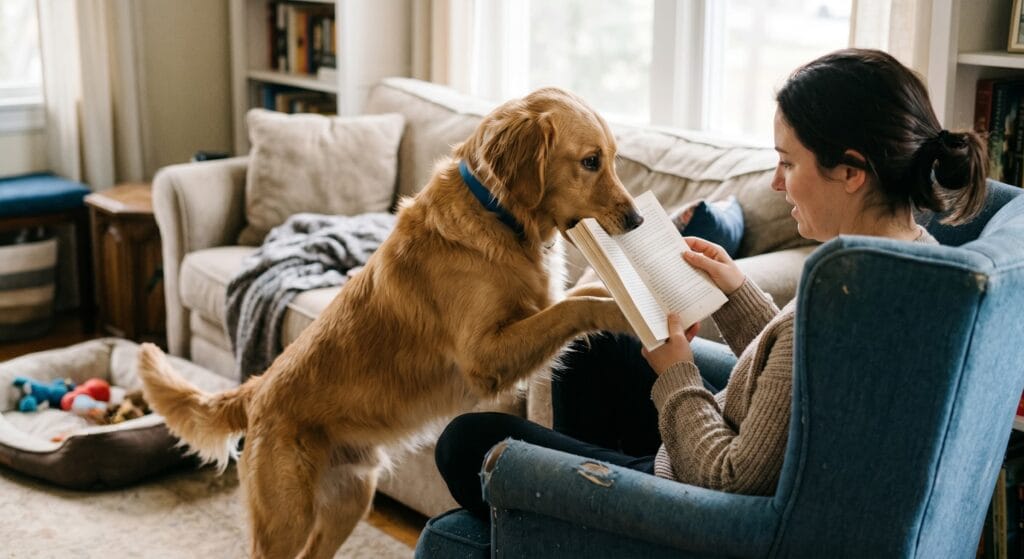
This is especially true for dogs that spend long stretches alone, have limited playtime, or follow the same unstimulating routine every day. The bed is often the target precisely because it’s yours. Why? It’s the most personal, scent-rich object in the home, and using it guarantees a response.
Understanding this dynamic is the first step toward addressing it because the solution isn’t punishment, it’s engagement.
6. Excitement Urination: The “Happy Pee”
While we express joy through cheers and laughter, dogs sometimes communicate overflowing excitement through their bladders.
Often called “happy pee,” excitement urination is most commonly seen in puppies and adolescent dogs. It occurs when a sudden surge of joy or intense stimulation triggers a momentary loss of bladder control.
During high-arousal moments, the sympathetic nervous system becomes so flooded with stimulation that the muscle that holds urine simply gives way.
The positive news: this reflex isn’t a behavioral issue, and it usually disappears as dogs mature and develop full bladder control.
7. Submissive Urination: A Social Signal
Not all emotional leaks are joyful. When scared, overwhelmed, or threatened, some dogs urinate to de-escalate situations. This is known as submissive urination.
By peeing, the dog instinctively signals they’re not a threat. This can affect dogs of any age and is often triggered by:
- Scolding or punishment
- Deep, loud voices
- A stranger approaching or leaning over them
- Feeling generally overwhelmed by unfamiliar situations
🔍 How to spot it: Observe your dog’s body language. Signs like flattened ears, a tucked tail, whimpering, and a lowered head or neck suggest your dog is stressed or frightened, not just excited. Root causes can range from a lack of socialization during puppyhood to a genetic predisposition toward shyness.
8. Underlying Medical Conditions
While occasional accidents during training or in senior dogs are understandable, but frequent, unexplained urination should be taken seriously, especially when it occurs suddenly in an otherwise house-trained dog.
Urinary Tract Infections (UTIs)
One of the most common medical culprits is a urinary tract infection. UTIs are bacterial infections that irritate the bladder and urethra, creating a persistent and sometimes overwhelming urge to urinate, often with little warning. Even a well-trained dog can’t override that urgency.
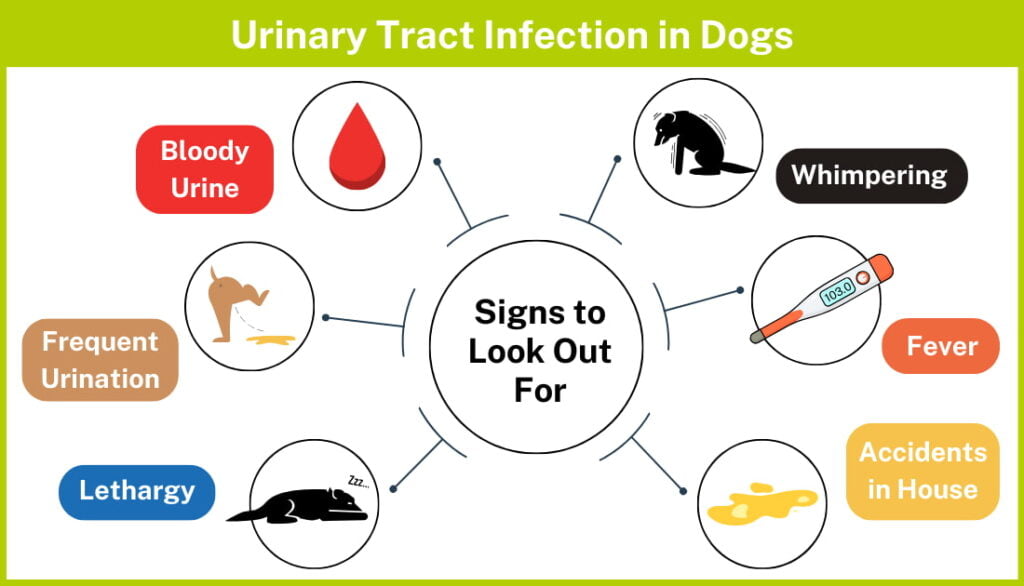
UTIs aren’t the only explanation. Other common conditions affecting urination include:
- Canine diabetes: Elevated sugar levels can increase thirst and water consumption, leading to more frequent and often urgent urination.
- Kidney disease: When the kidneys aren’t filtering waste effectively, toxins and waste products build up in the bloodstream. The body compensates by increasing urination frequency to flush out this buildup, even without increased water intake.
- Bladder stones: Mineral deposits that form in the urinary tract can cause painful urination, straining, and unpredictable accidents both indoors and outdoors.
If your dog is having frequent or sudden accidents with any of the above symptoms, schedule a veterinary check-up promptly. These conditions are manageable if caught early, but won’t resolve on their own.
Strategies on How to Stop Your Dog From Peeing on the Bed
1. Practical Potty Training and Behavioral Reinforcement
For puppies and young dogs, most bed-wetting comes down to one thing: their bladder isn’t ready yet. The solution isn’t discipline; it’s structure.
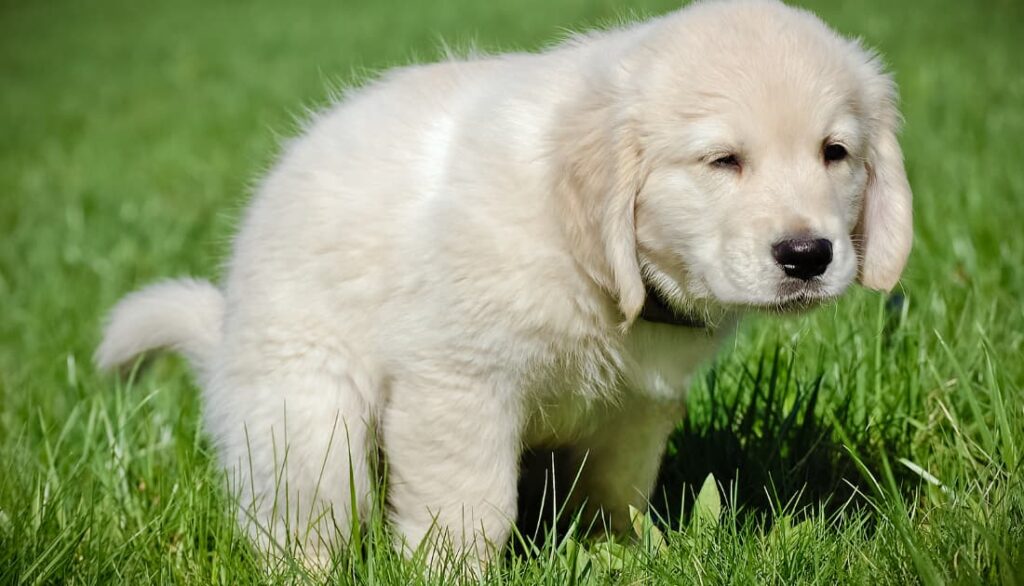
A consistent bathroom schedule is the single most effective tool in early potty training. A helpful rule of thumb: puppies need a bathroom break once per hour for every month of age — but this is a maximum, not a guarantee.
| Age | Maximum Hold Time |
|---|---|
| 2 months | Every 2-3 hours |
| 3 months | Every 3-4 hours |
| 4 months | Every 4-5 hours |
| 6+ months | 6-8 hours |
A few important exceptions to keep in mind:
- After activity: If your puppy was recently playing, eating, or drinking, they may need to go out every 30–60 minutes, regardless of their age.
- After sleep: After your puppy wakes up, always take them outside immediately. This is one of the highest-risk moments for an accident.
- The upper limit: For older puppies, it’s generally recommended not to exceed 6–8 hours between bathroom breaks.
By the age of 4–6 months, most puppies have developed enough bladder control to hold it for several hours. However, until then, frequent breaks are essential.
When your dog successfully uses their designated spot, immediately reward them with praise or a treat. Positive reinforcement helps create the association between the right location and a reward, which is key to forming the habit.
🐾 Owner’s Tip: The Power of a Cue Word or Phrase
One effective technique I’ve used with my own dog is teaching him a consistent cue phrase: “Do you need to go potty?” I say it the same way every time before each bathroom break. Over time, this phrase has become a signal for him.
Now, when I ask if he needs to go, his tail starts wagging, and he walks me to the door. It may sound simple, but this kind of two-way communication makes the process significantly easier for both of us.
Here are a few additional strategies worth building into your routine:
| Potty Training Tip | How to Implement |
|---|---|
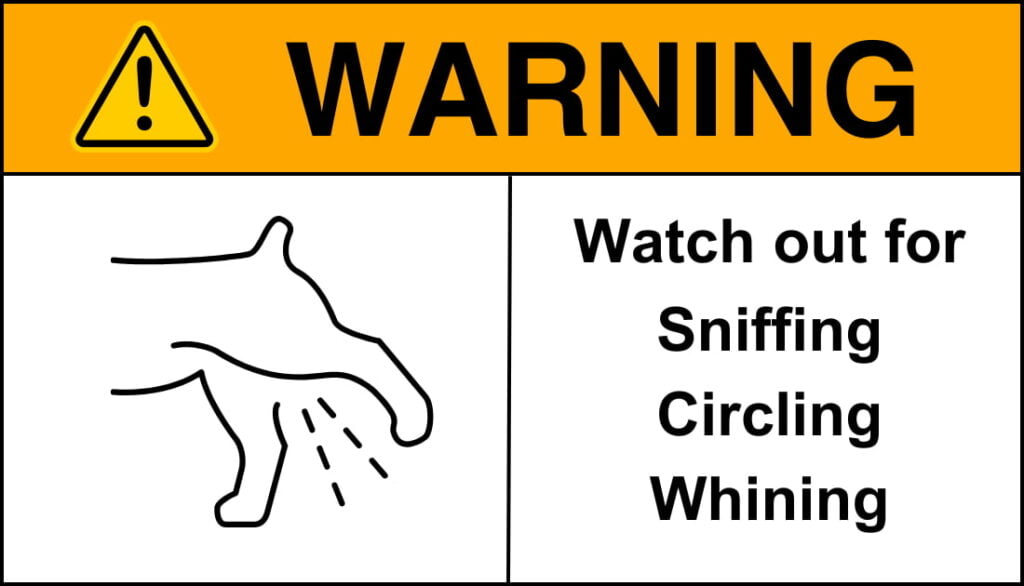
| Watch for pre-potty signals | Sniffing, circling, squatting, or sudden restlessness are all signs your dog needs to go, so act quickly |
| Limit water before bed | Provide water freely during the day but remove the bowl 2 to 2.5 hours before bedtime |
| Seek professional help | If consistent training isn’t producing results, a veterinarian or certified trainer can identify what’s being missed |
2. Managing Senior Dog Incontinence
If you notice changes in your senior dog’s bathroom habits, the first step should be a veterinary check.
A vet can identify the underlying cause and recommend appropriate treatment, which may include medication, dietary adjustments, or supportive equipment, depending on the diagnosis.
In addition to veterinary care, you can take practical steps at home to manage the impact of urinary incontinence:
- Proper hydration: Ensure your dog always has access to fresh water. Dehydration can worsen incontinence by concentrating urine and further irritating the bladder.
- Supplements: Ask your vet about omega-3 fatty acids, which have anti-inflammatory properties that may support bladder and urinary tract health.
- Protect your living spaces: Place absorbent training pads in areas where your dog spends the most time. Use waterproof covers on furniture and bedding to minimize damage.
- Weight management: Maintaining a healthy weight through balanced nutrition and regular gentle exercise reduces pressure on the bladder; excess weight can directly worsen incontinence.
- Belly bands and dog diapers: These can be a practical, short-term solution to protect your bedding while you work with your vet to address the underlying cause.
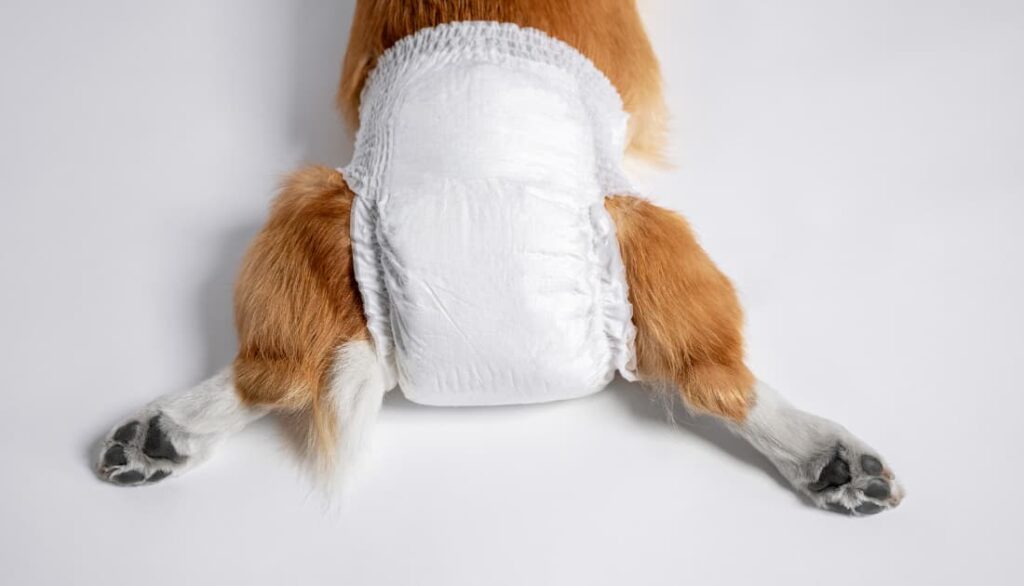
It’s worth remembering that senior incontinence isn’t a behavioral problem, meaning it isn’t due to spite or a training failure. It’s a physical reality that comes with age, and your dog is no more in control of it than they would be of any other age-related change.
What they need most in this phase isn’t correction, but patience, adaptation, and the same care they’ve always given you.
3. Addressing Territory Marking
Territory marking requires a slightly different approach than potty training because the behavior is intentional rather than accidental. The goal is to redirect the instinct rather than suppress it entirely.
- Rule out medical causes first: Sudden or excessive marking can sometimes indicate an underlying health issue rather than a behavioral one. A quick veterinary check eliminates that possibility before you invest time in behavioral solutions.
- Identify the triggers: Observe what happens in the lead-up to marking incidents. New guests arriving, recently moved furniture, or encounters with unfamiliar animals are all common triggers. Knowing the trigger is the first step toward managing it.
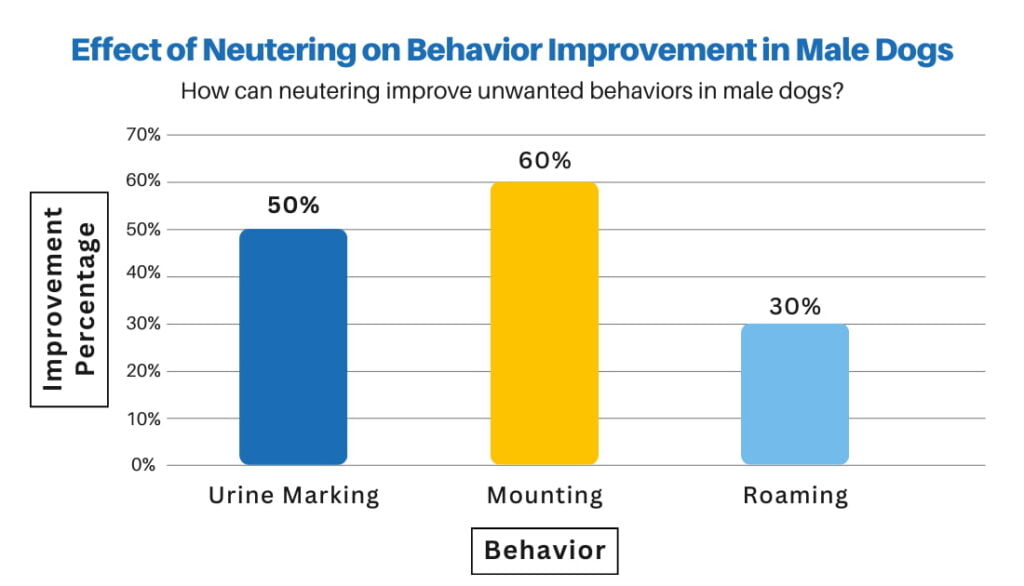
- Consider neutering: Neutering is more effective at reducing marking behavior in male dogs than female dogs, primarily because it lowers testosterone levels, which directly drives the territorial instinct. As the chart below shows, studies suggest neutering can reduce urine marking in males by up to 50%.
- Clean up thoroughly with enzymatic cleaners: When an accident happens, the scent left behind is the biggest driver of repeat marking. Your dog can detect traces of urine that are completely invisible to you.
- Enzymatic cleaners break down odors at a molecular level rather than just masking them. For a full breakdown of how to clean a dog bed after a marking incident, see our complete guide to washing a dog bed with stuffing.
- Encourage marking outside during walks: Giving your dog designated opportunities to mark on your regular route satisfies the instinct in an appropriate context. Praise them for using these spots. You’re not eliminating the behavior, you’re redirecting it to where it belongs.
4. Managing Stress and Fear-Related Urination
Stress and fear-related urination requires a three-part approach: identifying the trigger, responding in the moment, and gradually reducing the emotional response over time.
Identify the Trigger
Start by observing when and where the accidents happen. Does it occur when you’re preparing to leave the house? After a loud event nearby? After a new person visits?
The pattern almost always points to a specific trigger, and knowing the trigger is what makes everything else in this section actually work.
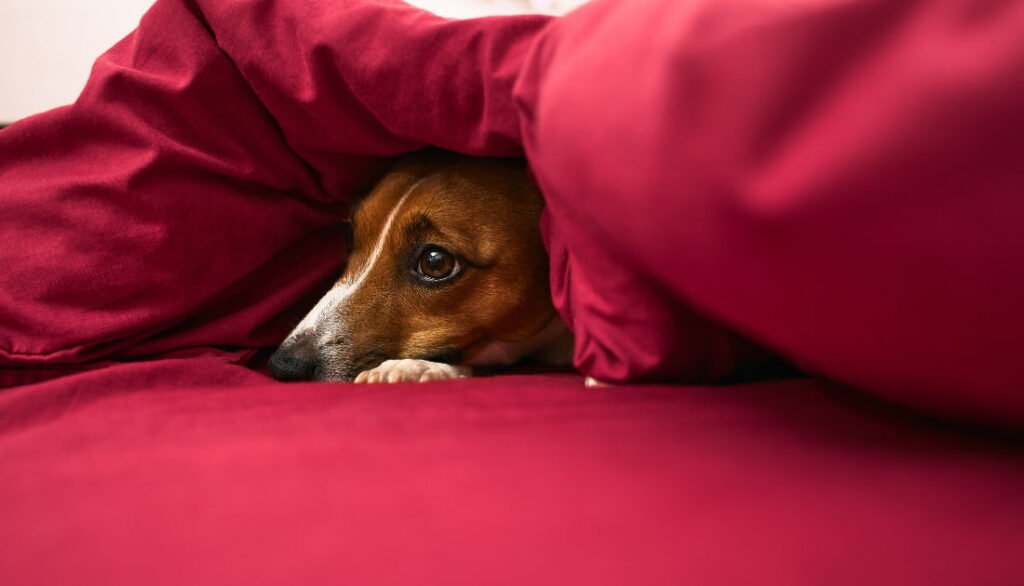
Respond in the Moment
Once you’ve identified the trigger, create conditions that reduce your dog’s stress response when it occurs:
For loud noises – thunderstorms, fireworks:
- Safe space: Designate a quiet, windowless space filled with familiar items, such as their bed, their favorite blanket, or a worn piece of your clothing.
- Sound distraction: Use white noise or calming music to mask the sound.
- Calming products: Consider pheromone diffusers or anxiety wraps for additional support.
For separation anxiety:
- Gradual departures: Practice short, calm departures and gradually increase the duration. For a full step-by-step protocol, see our Desensitization Protocol in the bed chewing guide.
- Interactive toys: Leave puzzle toys or food dispensers to keep your dog mentally occupied while you are away.
- Calming supplements: Discuss calming supplements or anxiety medication with your vet if the anxiety is severe.
Reduce the Response Over Time
While managing the trigger helps in the short term, the long-term goal is to change your dog’s emotional association with it entirely.
Counterconditioning and desensitization are the most effective approaches. If your dog is afraid of storms, play a recording of thunder at a very low volume while offering treats and calm praise. Gradually increase the volume, but only when your dog is consistently relaxed at the current level. Over time, the sound stops predicting danger and starts predicting something good.
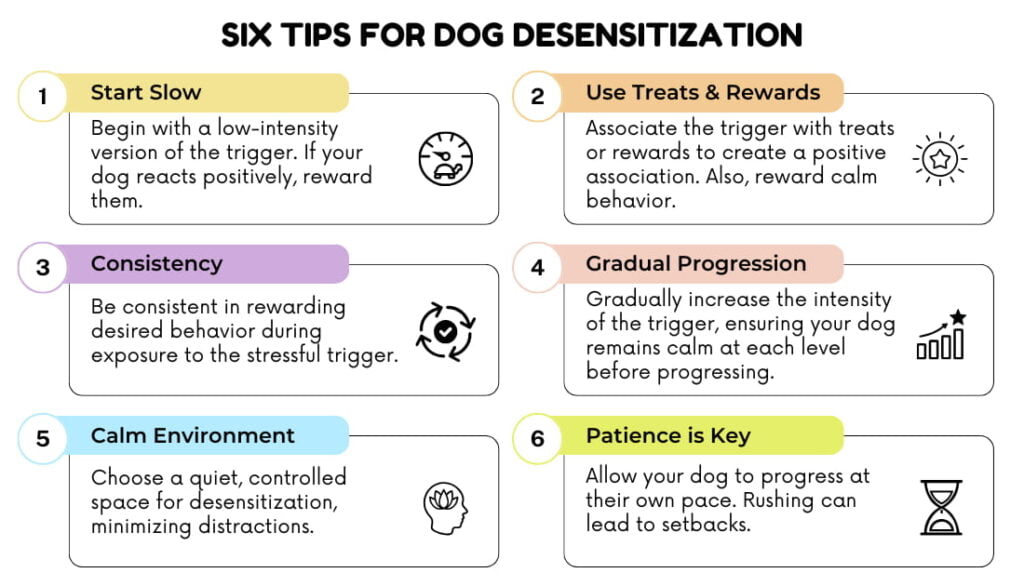
Regular exercise and mental stimulation support this process by keeping your dog’s baseline stress levels lower. A dog that is physically and mentally satisfied is significantly more resilient to triggers than one running on unspent energy.
Progress with fear and anxiety is rarely linear. But with consistency, most dogs show meaningful improvement over time.
5. Mental Stimulation and Enrichment
If your dog spends long stretches alone, follows a repetitive daily routine, and gets limited interactive play, boredom is likely contributing to the problem.
The solution is straightforward: make your dog’s day more interesting.
- Interactive play: Swap repetitive walks for activities that engage your dog’s mind, such as scent work, treasure hunts, frisbee sessions, agility courses, or hide-and-seek with their favorite toys.
- Companionship: If your workday is long, doggy daycare, a dog walker, or a pet sitter can make a significant difference to a dog that struggles with extended alone time.
- Toy rotation: Keep novelty alive by rotating toys rather than leaving everything out at once. Surprisingly, a rediscovered toy registers as genuinely new to your dog.
- Socialization: Playdates with other dogs or group training classes provide both mental stimulation and social engagement in one session.
- Proactive connection: Schedule dedicated one-on-one time with your dog before periods of alone time. A dog whose social needs are met before you leave is far less likely to resort to attention-seeking behavior while you’re gone, including bed-wetting.
For a more detailed breakdown of enrichment strategies and their effects on behavior, see our guide on how to stop your dog from chewing their bed — the principles apply equally here.
6. Managing Excitement Urination
In fact, it typically makes things worse, turning excitement urination into submissive urination. The goal is to keep arousal levels low enough that the physical reflex never gets triggered.
1. The Low-Key Greeting
The goal is to keep your dog’s arousal level below the threshold where the physical reflex kicks in.
- Ignore the hype: When you walk in, or your dog jumps up to greet you, avoid eye contact, high-pitched talking, or enthusiastic petting.
- Wait for calm: Hold off on any greeting until your dog has all four paws on the floor and has visibly settled. Then offer a quiet, gentle pet.
2. Keep Greetings Low to the Ground
Leaning over a dog or reaching over their head is a common trigger for an excitement spike.
- Get to their level: Squat down rather than bending over them. It keeps the interaction less physically intense and less likely to tip them over the threshold.
3. Move the Greeting Outside
If your dog is prone to excitement urination, don’t let the first greeting of the day happen on the bed.
- Strategic exit: Before the big hello, lead them straight outside or to an easy-to-clean surface. Once they’ve emptied their bladder outside, the physical risk drops to zero.
4. Direct the Energy
Give your dog something to do with all that excitement.
- The toy trick: Keep a favorite toy near the bed or front door. The moment excitement builds, offer the toy. Carrying something in their mouth redirects the excitement, and this method is surprisingly effective.
5. Build Bladder Strength Over Time
- Time is the greatest cure: Most dogs outgrow excitement urination by their first birthday. As they grow, the muscles controlling the bladder become stronger, and the reflex becomes easier to contain. If the issue continues into adulthood, consult your veterinarian. Sometimes, there may be a physical component that medication can address.
The most important thing to remember is that this is an involuntary physical response. Your dog isn’t choosing to pee; their nervous system is simply overwhelmed with joy. Because of this, punishment won’t be effective.
7. Managing Submissive Urination
Submissive urination is a sign of insecurity rather than disobedience, which means the solution isn’t correction, it’s reassurance. The goal is to show your dog through your body language and behavior that you are safe and non-threatening.
- Never punish the accident: Scolding or raising your voice deepens the anxiety that caused the accident in the first place. In your dog’s mind, the punishment is associated with you yelling, not with the mess on the bed. This creates fear of you, rather than an understanding that the behavior was wrong.
- Change your approach: Come toward your dog from the side rather than head-on, and avoid prolonged direct eye contact. In dog communication, a direct frontal approach and sustained eye contact both signal confrontation.
- Lower yourself: When giving your dog attention, crouch down to their level rather than standing over them. Height is intimidating to an insecure dog, so lowering it makes you more approachable.
- The chin pet rule: Rather than reaching over your dog’s head, offer pets under the chin or on the chest instead. Reaching over a dog’s head mimics the motion of grabbing and triggers a flinching response in insecure dogs, while contact from below feels less threatening and more inviting.
- The 5-minute rule: If your dog urinates when you return home, ignore them for the first five minutes before offering affection. Waiting five minutes lets your dog’s heart rate and bladder control return to baseline, rather than rewarding the excited state that caused the accident.
8. Addressing Medical Causes: Working with Your Vet
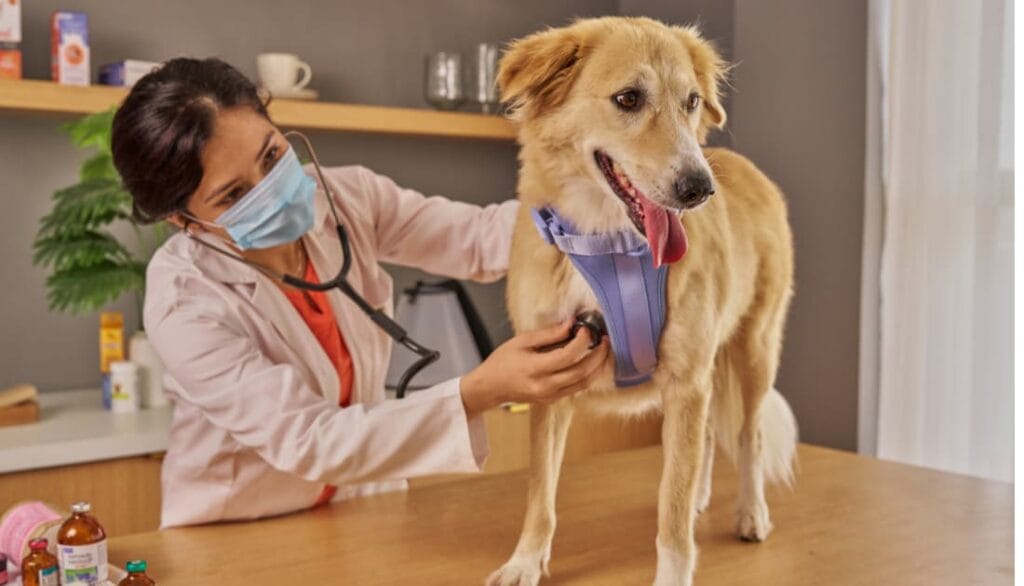
If you’ve worked through the behavioral solutions above and the accidents persist, a medical cause is worth investigating.
The table below covers the most common conditions that affect urination patterns in dogs; use it to help frame the conversation with your vet rather than as a diagnostic tool.
| Medical Issue | Symptoms | Potential Treatment |
|---|---|---|
| Urinary Tract Infection (UTI) | Frequent urination in small amounts, straining, blood in urine, excessive licking of genitals | Antibiotics |
| Bladder Stones | Frequent or bloody urination, difficulty urinating, abdominal pain, vocalization during urination | Dietary changes, medication, surgery |
| Diabetes Mellitus | Increased thirst and urination, unexplained weight loss, increased appetite, lethargy | Insulin therapy, dietary changes |
| Kidney Disease | Increased thirst and urination, lethargy, vomiting, loss of appetite | Dietary changes, fluids, medication |
| Cushing’s Disease | Increased thirst and urination, pot-bellied appearance, hair loss, increased appetite | Medication, surgery in some cases |
| Neurological Issues | Difficulty walking or standing, loss of bladder control, muscle weakness | Medication, surgery, physical therapy |
| Hormonal Imbalances | Changes in urination frequency, appetite or weight fluctuations, lethargy, skin changes | Medication, surgery in rare cases |
⚕️ Important note: This table is for informational purposes only and does not replace professional veterinary advice. If your dog is showing unusual changes in their urination habits, schedule an appointment with your vet for a proper diagnosis and treatment plan. Early intervention gives your dog the best chance of a full recovery — and in most cases, these conditions are very manageable when caught early.
Long-Term Strategies to Keep Your Bed Dry
Addressing the immediate cause is important, but building habits and boundaries that prevent accidents from happening in the first place is what makes the difference long term.
Restricting Access With Crates and Gates
One of the most reliable prevention strategies is simply limiting your dog’s unsupervised access to your bed, particularly during potty training or periods of behavioral adjustment.
A properly set up crate gives your dog a comfortable, contained space of their own while eliminating the risk of bed accidents. The key is making the crate genuinely inviting rather than a last resort — the right size, a comfortable bed inside, and positive associations built over time.
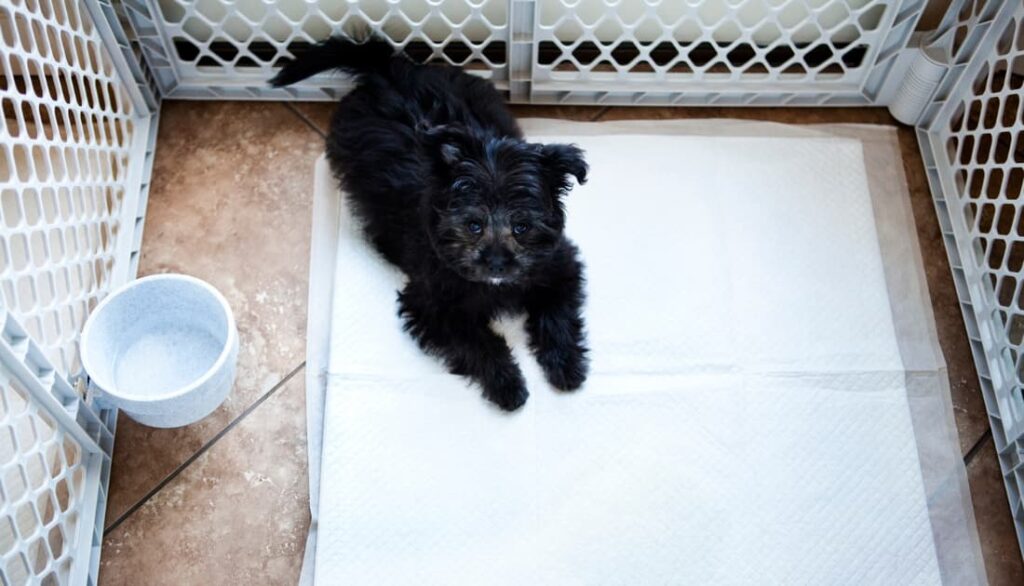
Baby gates or room dividers are a practical alternative for dogs that are already crate-trained or simply need their bedroom access restricted during certain hours.
Choose a gate that is sturdy enough to hold against an enthusiastic dog. A gate your dog can push through defeats the purpose entirely.
💡 Sizing tip
Your dog’s crate should be large enough for them to stand up, turn around, and lie down comfortably, but not so large that they use a corner as a bathroom. A snug fit encourages the den instinct rather than undermining it.
Remember, the goal isn’t to banish your dog forever. The goal is to build a routine where the bed becomes a reward for a calm, empty bladder rather than a default nap spot.
Supervision and Intervention
Physical barriers work best when combined with active supervision, particularly during the early stages of training when habits are still forming.
Learning to read your dog’s ‘I have to pee’ signals, like sniffing, circling, or whining , gives you a window to redirect them outside before an accident happens. The sooner you recognize the signal, the easier it will be to intervene.
These four techniques work together to reinforce appropriate potty habits consistently:
| Intervention Technique | Description | Purpose |
|---|---|---|
| Redirecting on Approach | Gently leading your dog away from the bed before they settle on it | To break the habit of treating the bed as a default resting spot |
| Command and Praise | Using a calm “no” the moment your dog attempts to access the bed, followed by immediate redirection and praise for compliance | To correct the behavior in the moment using positive reinforcement |
| Observation Periods | Watching closely after meals, play, and nap times | To anticipate and prevent accidents during the highest-risk windows |
| Designated Potty Breaks | Scheduled outdoor breaks every 2-3 hours, or immediately after waking, eating, or playing | To establish a consistent elimination routine and reduce the likelihood of indoor accidents |
When to Seek Professional Help
If you’ve worked through the strategies in this guide consistently for several weeks and the accidents persist, professional support is worth pursuing.
A veterinarian should always be the first call, especially if the behavior changes suddenly or is accompanied by any physical symptoms mentioned in the medical section. Many causes of inappropriate urination are medical rather than behavioral, and no amount of training will resolve a UTI or hormonal imbalance.
If your dog has a clean bill of health but the behavior persists, a certified animal behaviorist can assess the possible cause. Certified behaviorists can recognize patterns in dog behavior that may not be obvious to owners, particularly regarding anxiety, fear responses, and deeply ingrained learned habits.
A personalized plan from someone who has observed your dog directly is often the missing piece after self-guided training reaches its limit.
Key Takeaways
If there’s one thing this guide has tried to make clear, it’s this: your dog isn’t peeing on your bed to spite you.
Every reason we’ve covered, ranging from incomplete potty training to territorial marking, excitement, anxiety, and medical conditions, points to a dog communicating something rather than acting out.
Understand the reason first. The solution for a puppy with an underdeveloped bladder looks completely different from the solution for a senior dog with incontinence or an anxious dog marking for comfort. Getting the diagnosis right is what makes everything else work.
Avoid punishment. It doesn’t address the cause and, in most cases, makes the behavior worse — particularly for submissive and fear-related urination where punishment deepens the anxiety that triggered the accident in the first place.
Be consistent and patient. Most of the strategies in this guide require weeks of repetition before they become habits. Progress is rarely linear. One bad week doesn’t mean the approach isn’t working.
Know when to ask for help. If consistent effort isn’t producing results, a veterinarian or certified behaviorist is the logical next step. Asking for help is not a sign of failure.
Your bed will stay dry. It just takes understanding your dog well enough to know which path gets you there.